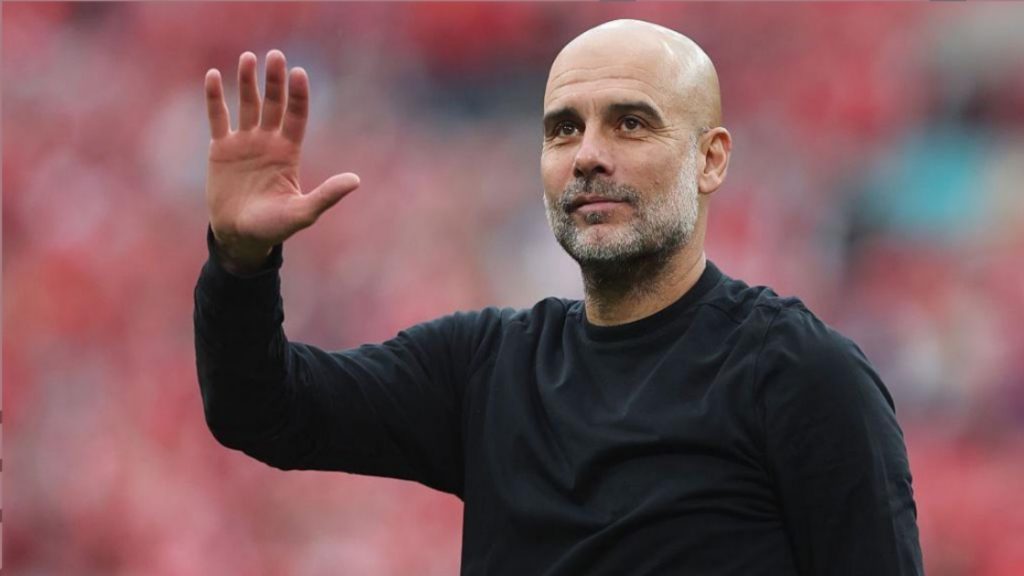
When Pep Guardiola arrived at Manchester City in 2016, the world already knew him as a tactical genius, a maestro to say the least.
Arriving the Premier League, it was certain that he would introduce so many changes to the league and boy he did.
In the decade he spent at City, one that was laced with so many trophies, Pep Guardiola made serious changes that became the template that other teams began to work with.
To his credit, Guardiola implemented a lot of changes. He made teams to be more focused on possession-based football to appreciate the use of two number 8s to the use of box midfields to false 9s when he won the league without a traditional striker and much more.
But the most adverse system would be how he made teams and coaches in the EPL to change the most important part of a goalkeeper’s work – shot stopping.
As a goalkeeper, you had one job.
You were supposed to prevent the ball from going into the net. Today, a common term for referring to goalkeepers is now “ball-playing goalkeepers.”
When Guardiola arrive the Premier League, the work of goalkeepers keeping the ball out of their nets was no longer enough.
They needed to receive the ball under pressure. They had to pass. They had to attract the opposition press. They had to find midfielders between the lines. They had to function almost like an extra outfield player.
His first major decision as City’s manager was to remove Joe Hart and replace him with Bravo – that was a decision many would have criticized him for if it hadn’t worked out.
Bravo’s stay was also short-lived as he got replaced by an actual ball playing goalkeeper – Ederson.
The Brazilian goalkeeper was the perfect profile for Pep Guardiola. Ederson could:
- Play it short
- Hoof it long
- Split opposition press with one pass
- Pass to a running winger 60 yards away with pinpoint accuracy
Ederson’s passing was so good that he currently holds the Premier League record for the goalkeeper with the most assists – 7.
Even the Premier League admits that replacing Joe Hart and Bravo with Ederson was the beginning of ball-playing goalkeepers in the league.
Before Guardiola, Ball-playing Goalkeepers were a Luxury
Prior to coming to the EPL, if you had a goalkeeper who could play with the ball, it was seen as a luxury.
Today, it is a requirement.
The traditional idea of goalkeepers like we had then the likes of De Gea, Kasper Schiemciel, Petr Cech, etc were keepers who were good at shot stopping, could claim high balls, have incredible reflexes, and commanded their penalty area.
Nobody cared whether the keeper had legs, at least they did, when they needed him to use his feet to block low shots. The keeper’s feet were not expected to be used to pass accurately or break presses.
That for Guardiola was what needed to change.
And Ederson was the perfect specimen to show the EPL that it was possible.
The Premier League highlighted how comfortable he was playing short and how his long passing could bypass an opposition press entirely.
FIFA’s technical analysis of Manchester City’s 2023 Club World Cup campaign similarly described Ederson’s distribution as an important part of how Guardiola’s team built attacks.
And it worked.
It worked spectacularly.
Manchester City won trophies.
They dominated possession.
They controlled territory.
They became one of the greatest teams the Premier League has seen.
And the goalkeeper was no longer merely the last line of defence.
He was the first attacker.
Teams Took a Cue
Of course, this move by Guardiola was working and teams decided to follow through. One team that did was City’s neighbors, Manchester United.
They let go of one of the best shot stoppers in the Premier League in De Gea for a ball-playing goalkeeper in Andre Onana.
The Cameroonian’s record was distasteful. Here’s what his stats at Manchester United look like:
Total Matches Played – 102
Total Goals Conceded: 150
Premier League Matches: 72
Premier League Goals Conceded: 102
Clean Sheets (All Competitions): 24
We can argue that Onana played with an easily exploited defense but the errors leading to goal from the goalkeeper is proof of why a shot stopper is still needed.
While Manchester United tried to do what City were doing, other teams found the weakness.
The Weakness of a Ball-Playing Goalkeeper
Every system can be exploited and Premier League managers began to find ways to exploit Guardiola’s ball-playing goalkeeping system.
It was simple – if the goalkeeper can play, press him and don’t let him play.
If the defenders are good with building from the back, press them and prevent them from doing so.
If you can force the ball into a goalkeeper’s feet and then aggressively attack the first pass, you can disrupt the entire structure.
And modern Premier League teams became increasingly aggressive without the ball.
The game that Guardiola helped create began adapting to Guardiola.
Even the numbers illustrate how dramatically goalkeeping distribution changed.
According to Opta Analyst, 74.2% of Premier League goal-kicks ended in the opposition half in 2015/16, the season before Guardiola arrived.
By 2024/25, that figure had fallen to 40.4%.
That’s an extraordinary change. It took long but you can expect humans to adapt to something they can’t beat.
For years, the EPL was focused on playing out the back. Now, it started to learn how to stop teams from playing out the back.
And Then Guardiola Bought Donnarumma
I couldn’t believe it when I saw City were in talks to sign Donnarumma from PSG.
Ederson, the golden son of Guardiola was out the door and instead of another ball-playing goalkeeper, City were going for a shot-stopper.
Mind you, Luis Enrique already said what he wanted from a keeper after dropping the Italian was a keeper who was a sweeper-keeper, someone who was good with his feet.
That means, Donnarumma was not going to be the kind of keeper Pep Guardiola would be going for.
The Premier League’s own analysis of the move described Donnarumma as a less capable passer than Ederson and suggested that the signing could represent a tactical change for Guardiola.
BBC went even further, describing it as part of a reversal of the trend Guardiola himself had helped establish.
Think about that for a moment.
The man who helped convince English football that a goalkeeper must be a playmaker…
…ended up replacing his great playmaking goalkeeper with one of the world’s elite traditional goalkeepers.
Maybe Guardiola Didn’t Get It Wrong
So, what if Guardiola did not get it wrong? What if he just choose to work with something different?
Donnarumma may not be a rejection of footballing ability but a recognition that something that once worked has stopped.
If opponents are now willing to press high and attack the space behind you – we hear things like winning the second ball, then you need to have a goalkeeper who can make extraordinary saves.
Opta Analyst made essentially this argument when examining Donnarumma’s arrival, pointing to the increasing importance of transitions and the diminishing value of simply building every attack from deep.
This is where we see what Guardiola is. He saw an opportunity to win with a new setup and he exploited it until the environment changed.
Shot-Stoppers are Now Back to the Premier League
The times we are in shows that shot-stoppers are back.
Sunderland who were newly promoted trusted 22 year old goalkeeper, Robin Roefs and he helped them secure a 7th place finish qualifying for Europe.
In his PL debut season, the youngster made 118 saves and had a 72% save rate. He is the 3rd highest from the 2025/26 season behind Golden Glove winner David Raya who had a 75% save rate and Allisson Becker with a 74.1% save rate.
Looking at all three keepers, they are not your regular ball-playing goalkeepers.
Raya is good with receiving the ball under pressure but he does not have the passing accuracy of Onana or Ederson. Same as Allisson and Roefs.
For Allison he carried Liverpool and was instrumental in ensuring they secure a slot to Europe despite their lacklustre performances under the now sacked Arne Slot.
That is what you need a goalkeeper for.
If he is great with the ball at his feet that’s good. But the focus should be “can he prevent goals?”
1 Comment
I completely agree
Guardiola wanted to be king by all means. He tweaked the system and when he saw it wasn’t working, he left his job